System Config
- Distro: Fedora Linux 44 (KDE Plasma Desktop Edition)
- CPU: AMD Ryzen 7 9800X3D
- Graphics Card: AMD Radeon RX 9070 XT
- Launcher: Steam
- Compatibility layer: GE-Proton v11.3
What was it about Goldeneye 64 and Perfect Dark that made them such stellar shooters almost 30 years ago? Was it the graphics? Sure – they were outstanding for the time. How about the gunplay? Absolutely – strafing in circles, spraying gunfire wildly at your mates was tense and satisfying. Level design, narrative, audio – check, check, check. Pretty much everything about these two golden oldies were spot on.
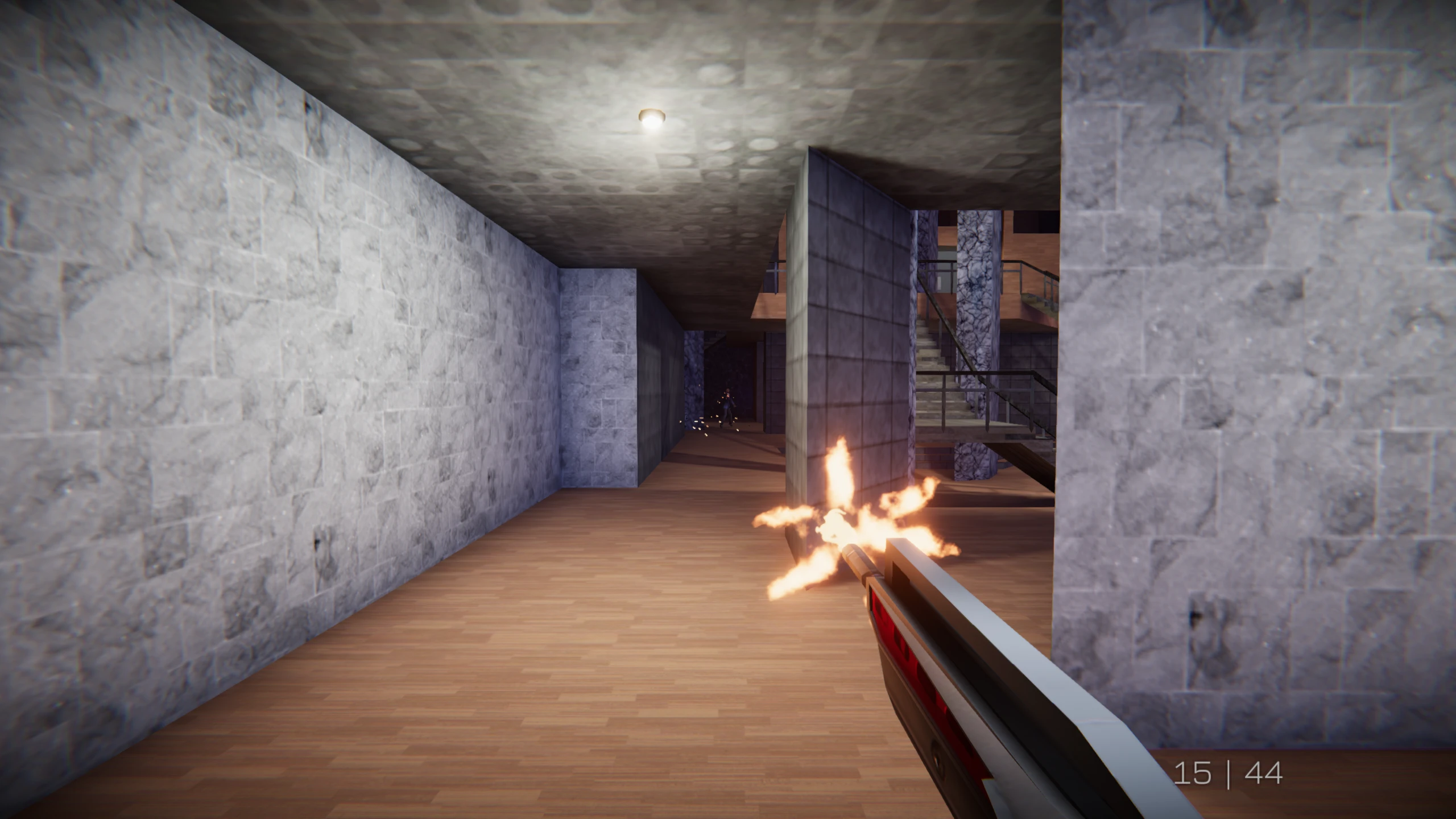
Why are we even talking about 30 year old games? Well, it’s because indie developer Replicant D6 has released Agent 64: Spies Never Die – a game built with modern tech that wears its Nintendo 64-era FPS inspiration on its sleeve. From the moment you launch into the first campaign mission, movement and combat feels very reminiscent of GoldenEye 64, only not at all choppy due to archaic framerates. There’s a distinctive buttery smooth nimbleness to the way your character, secret agent John Walter, moves. It’s like you’re gliding on a sheet of black ice with effortless stability and grace. It puts power behind every stride. I really dig it.
Unlike modern shooters, there’s no aim down sights option. You can manually aim with the right mouse button, which plants you firmly in place and zooms your view in a little, but for the most part you’ll be running and gunning your way from mission to mission. Aim Assist is on by default, and is quite charitable in how it helps line up your shots, so purists will probably want to disable this via the settings.
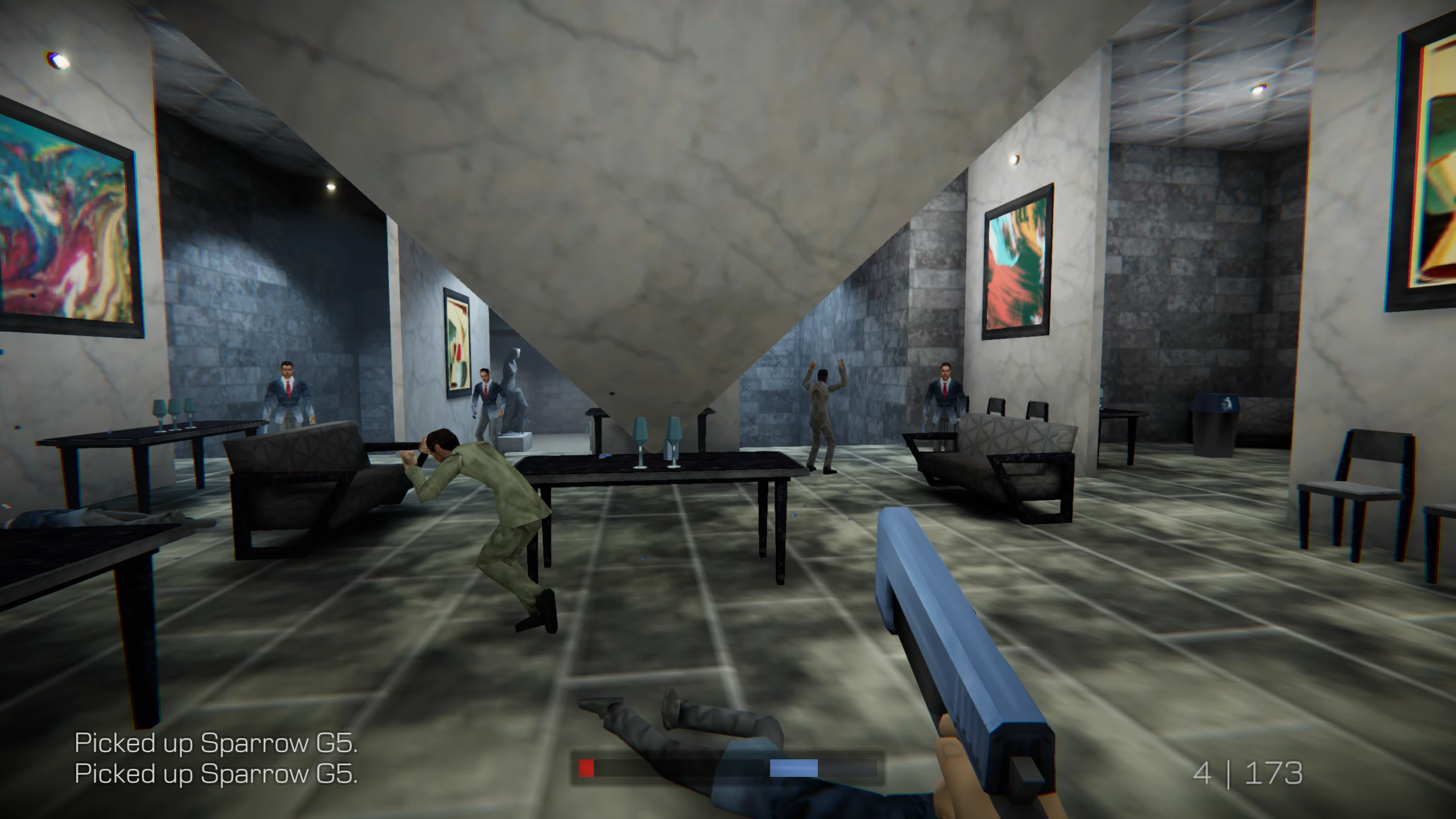
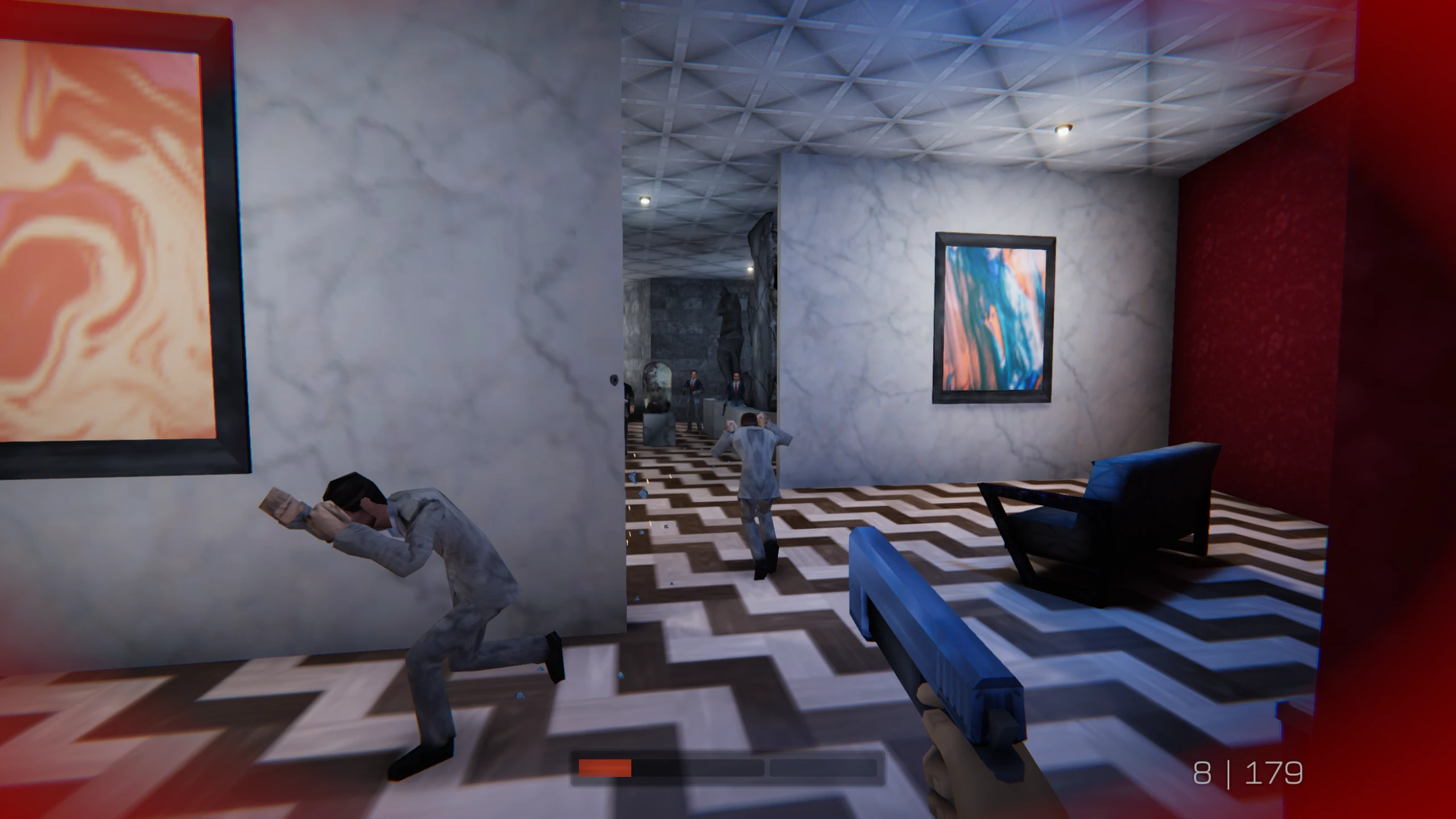
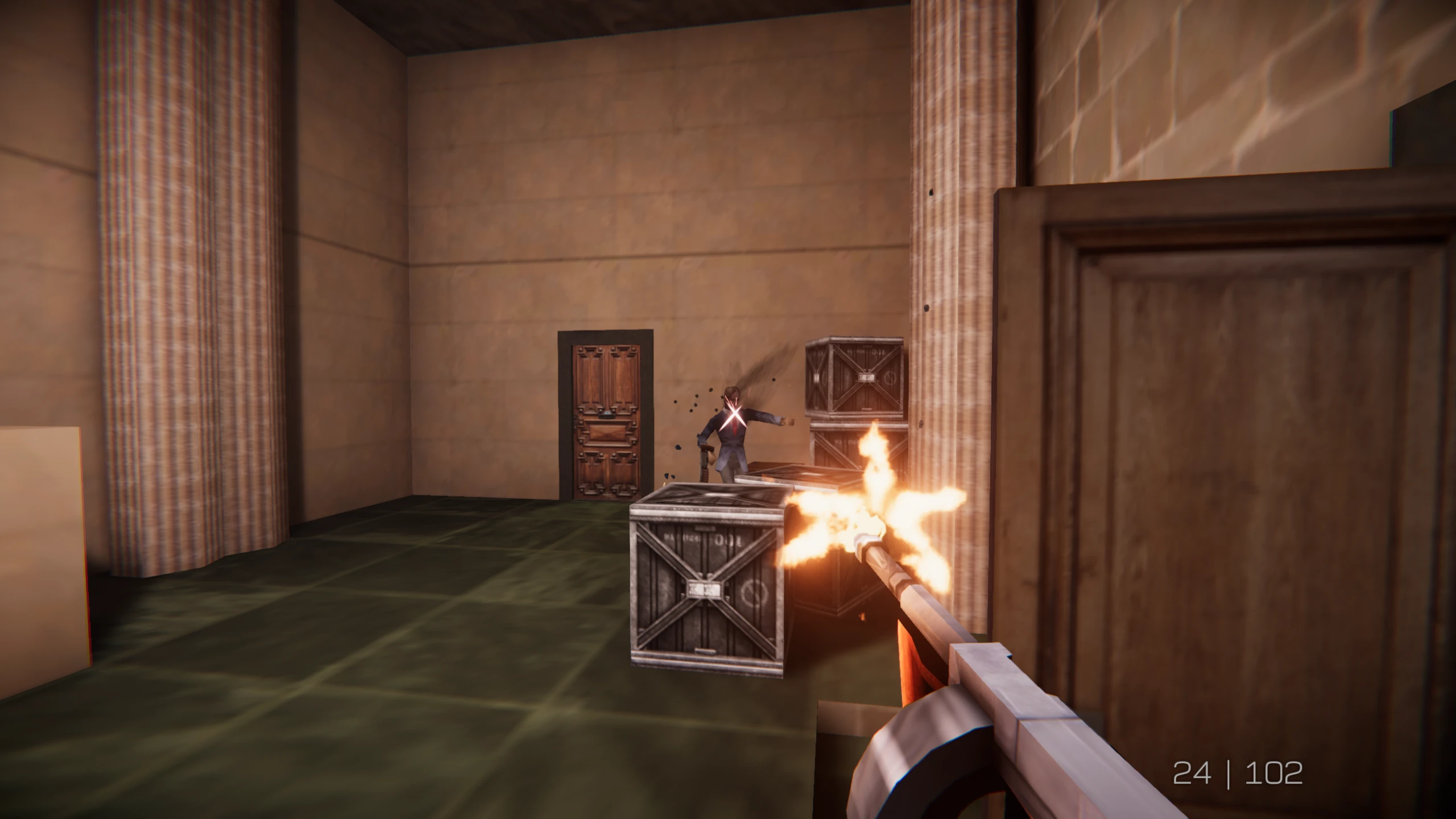
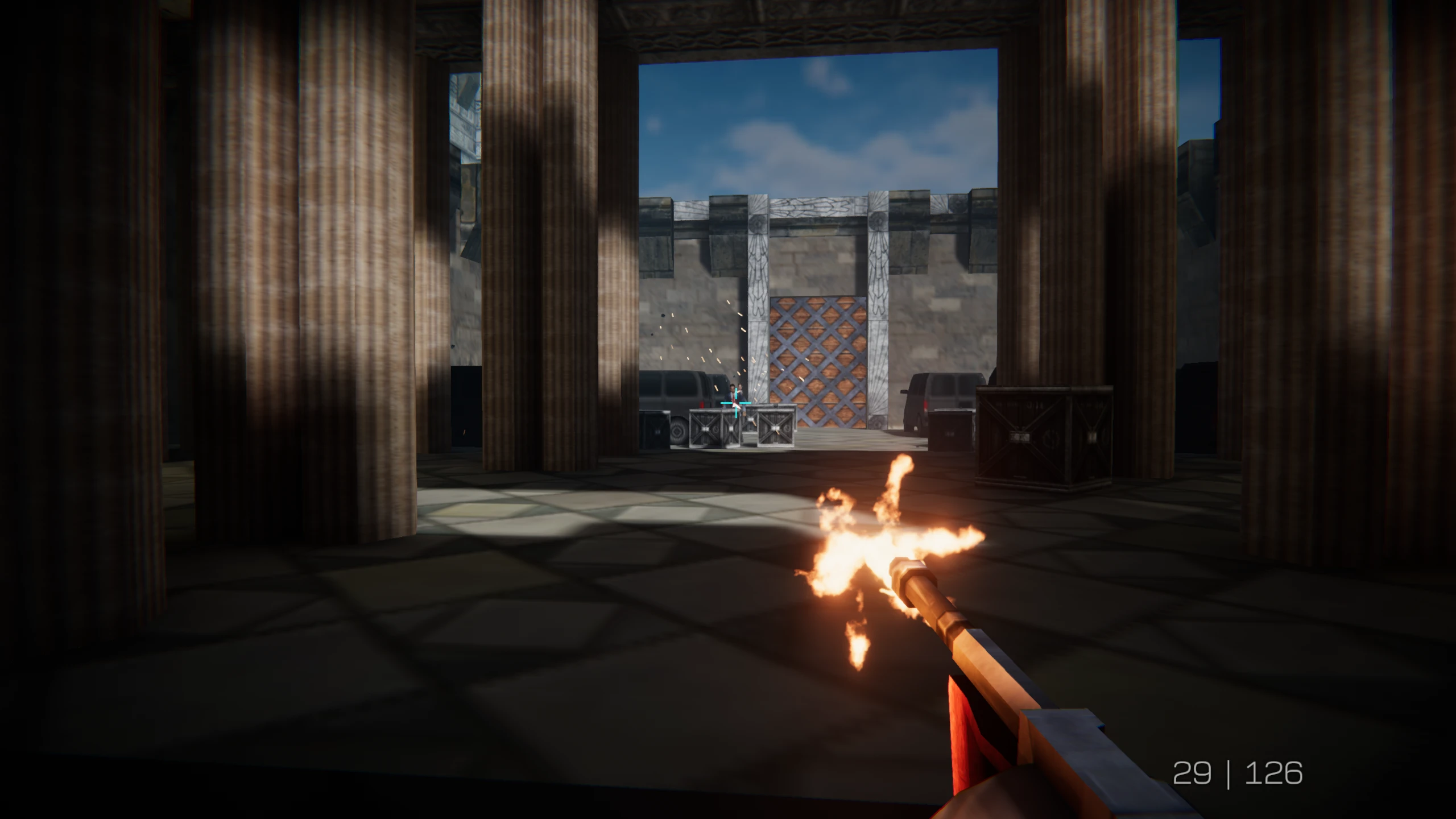
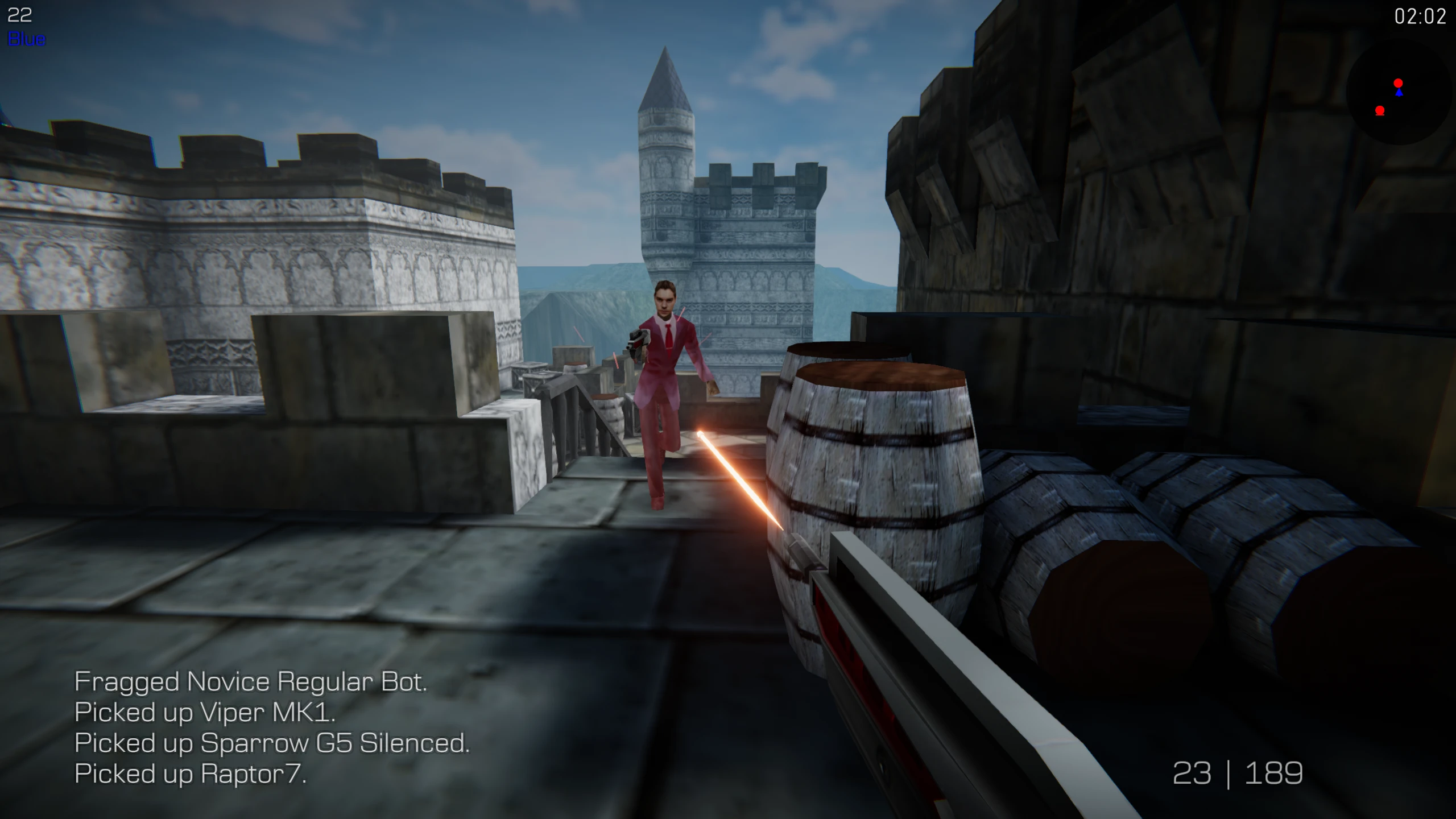
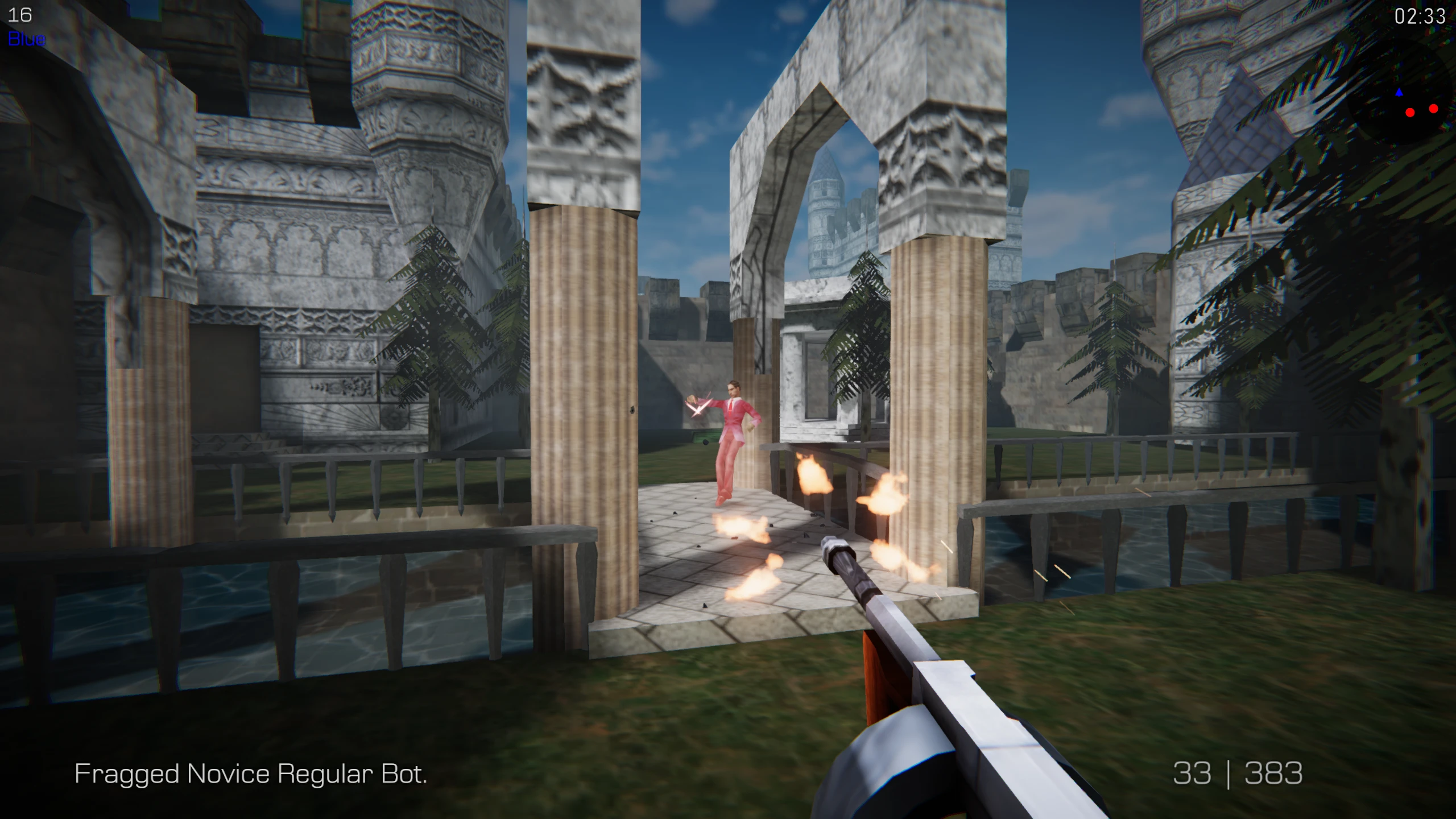
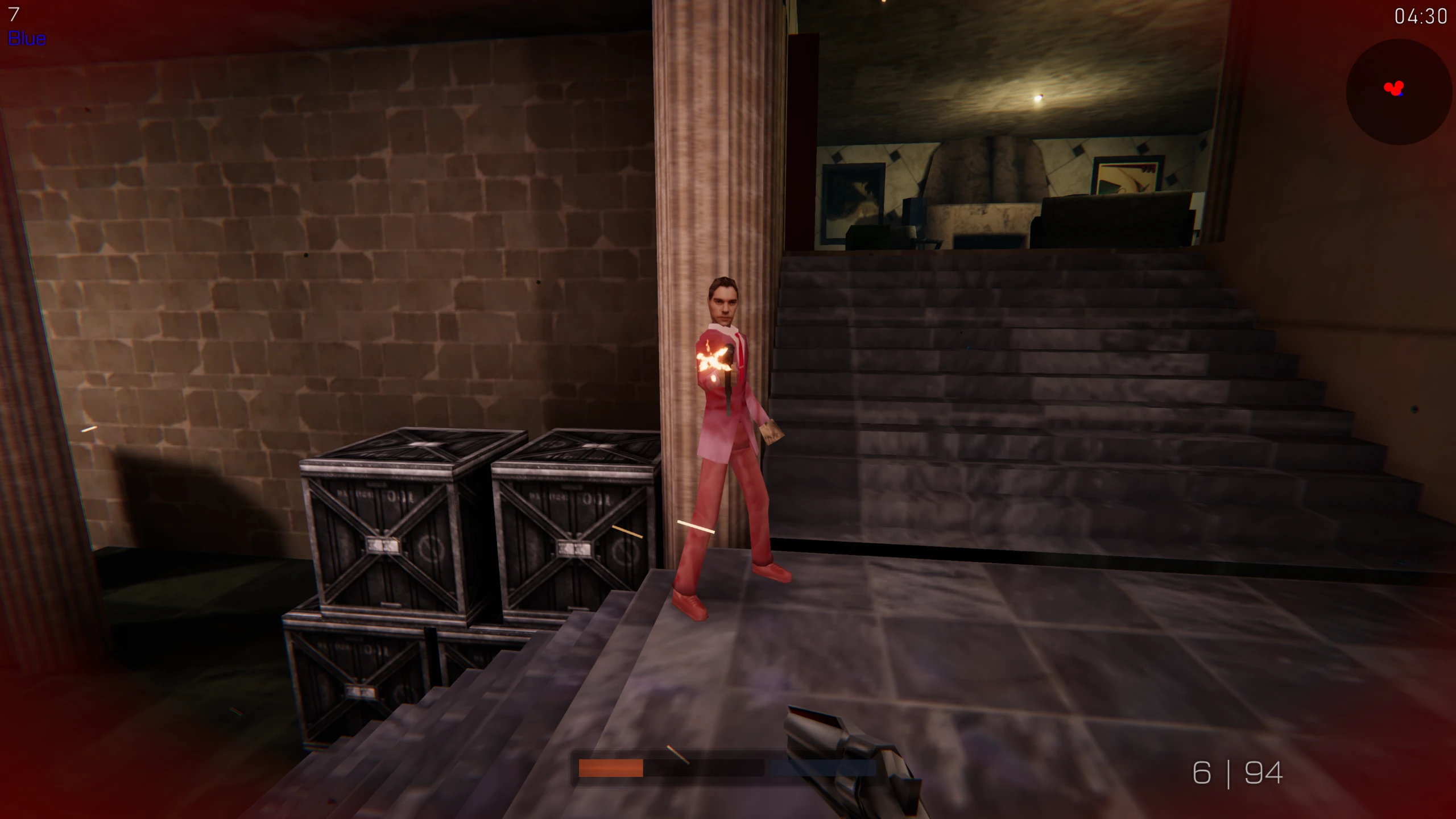
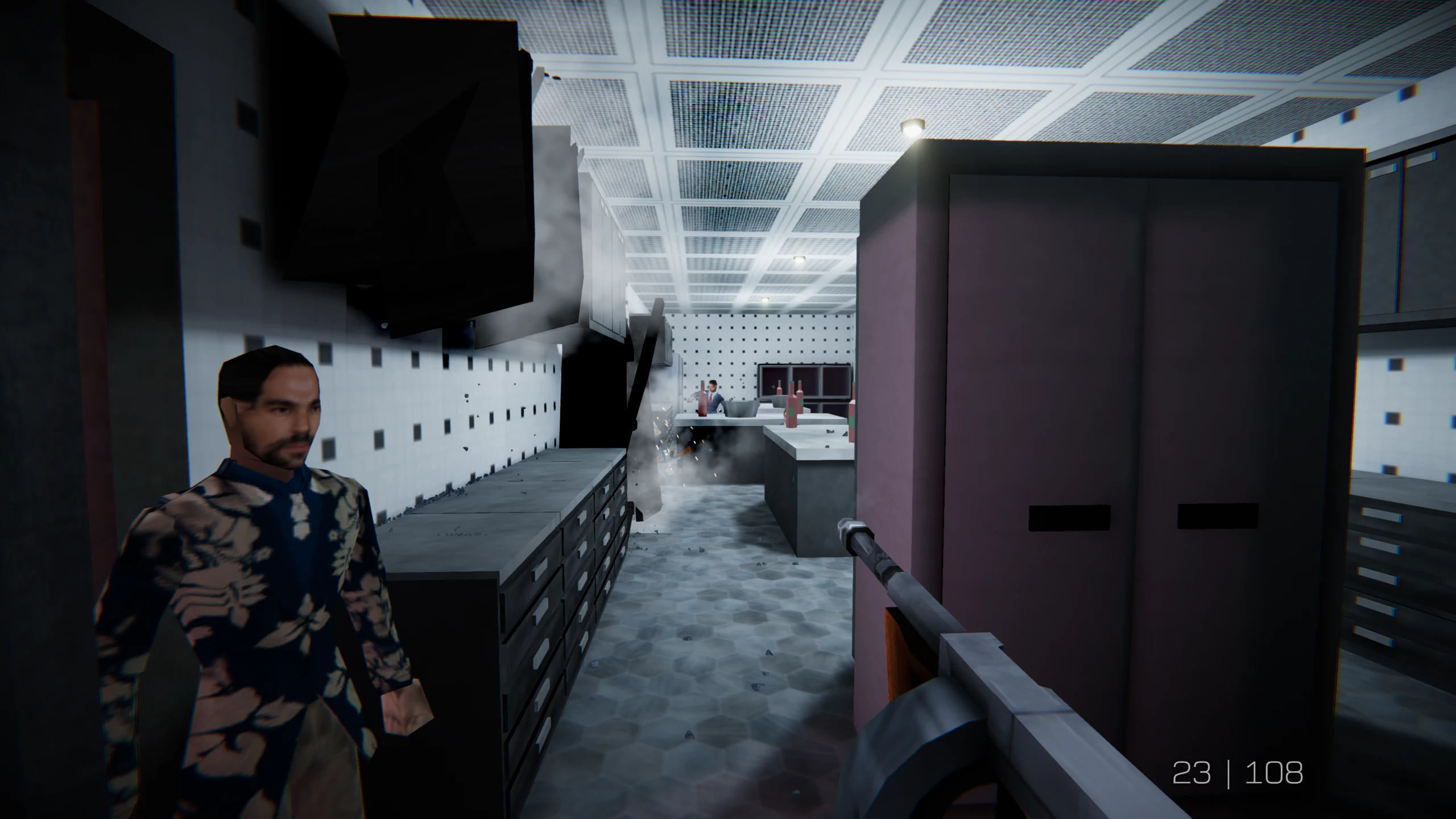
Combat looks a little like this: You strafe into a room, take a mental snapshot of the dangers, retreat behind cover, and once the incoming bullet spray has stopped, you dive back in with guns blazing. The enemy AI can be a mixed bag. You’ll definitely come across your fair share of foes who are completely oblivious to the gunfight that’s happening not even 25 yards from them. In the more open levels, you’ll be able to pick off unaware enemies without any fuss as their vision seems to only reach a fraction of yours. It’s moments like these that can be a little deflating, as the enemies whom are switched on and engaged demand that you dance around dodging bullets. Two or three enemies in single file usually aren’t a major threat, but when you’re flanked by the same amount (which seemed to only happen through my own reckless manoeuvring and not through any discernible enemy strategy), then you’re pretty much guaranteed to take a few hits. Most levels and areas do provide enough space for enemies to fan out, so the smart play is to hang back, clear out the nearest threats, then push up behind some cover.
There are three difficulty modes available, with the easiest mode offering up enemies on a platter, and the hardest ‘Agent 64’ mode feeling a little like you’re John Wick with a bounty on your head and all the top hitmen want a piece of you. I found the medium difficulty setting gave just the right level of challenge, and while I died more than a handful of times progressing through the campaign’s twelve missions, I didn’t feel cheated in any of my defeats. Taking it up a notch to the hardest difficulty gives the enemies improved accuracy and response times, and totally eliminates running and gunning as a viable strategy. The higher the difficulty you choose, generally the more objectives you’re required to complete per mission. Although, you’re never overwhelmed with objectives, and most missions only tend to throw around three or four at you. The Agent 64 exclusive objectives are usually quite trivial, adding smaller errands such as disabling alarms, retrieving various gear, planting explosives – the list goes on but they might only add an extra few minutes if you know what you’re doing.
It’s not always obvious which things you’re meant to interact with when it comes to hacking, disarming, and the like, but it was only once or twice that I got stuck. The levels are often times pleasantly expansive, and sometimes include an extra route or two to make backtracking a little more exciting. And there’s plenty of variety in the locales you’ll visit. I won’t spoil any of the more ambitious places you’ll visit later on in the campaign, but the story is suitably tongue-in-cheek that, well… they all sort of fit if you don’t think about it too much. The levels themselves are well structured, with tight death corridors and wide-open arenas to fight through. That said, there were a few areas that could have used a little extra polish. The ‘Mountain’ mission is quite bland for pretty much all the outdoors-y bits, which is probably 50% of the mission. The ‘Helipad’ mission is over quite quickly – taking only around five to 10 minutes, or less on repeat playthroughs. And one of the later missions is effectively a retread of the previous mission, only in reverse and with one very clear path back from B to A. Hmm.
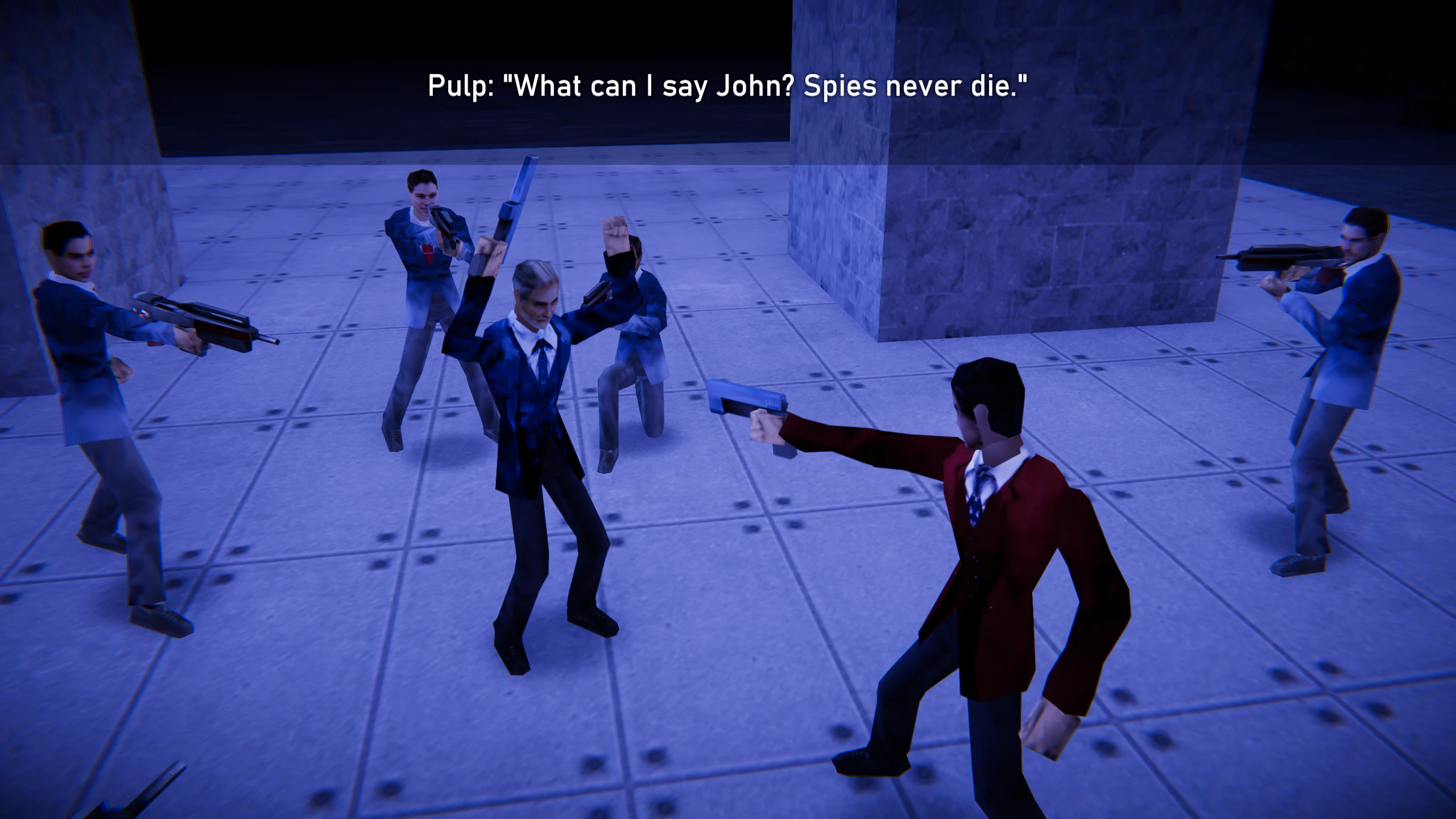
There’s no voice acting in the game, which is fine. The story is predominantly told through end-of or beginning-of mission cutscenes. It’s all servicable and fittingly spy movie panto – it’s fine. I quite liked being able to shut my brain off and go with the flow, actually. I was very pleased that, unlike rogueish figures like James Bond, secret agent John Walter did not stoop once to swearing or sharing mucky comments, and neither did his sidekick or the big bad. It was quite refreshing, and if any new content should become available for Agent 64: Spies Never Die, I’d like to see this continued. That said, mission two does feature a somewhat pixellated poster of three bikini-clad ladies. Only the upper torso is visible for all three, and only two of them have moderate clarity, but it’s disappointing this was included at all. You can’t miss the poster, you have to go right past it, and it makes no sense why it’s there. It just is because titillation, I guess.
The music fits the mood well, and helps to sell the super secret spy vibe across the entire campaign. Some tracks are reused across missions, but don’t outstay their welcome. They add tension where it suits, and in their own way. The Museum mission track especially is a low-key banger that really complements the requirement to play stealthily and slink around without drawing attention.
To progress through the campaign, you’ll need to conquer missions and earn Cyphers. Unlocking Cyphers is done by completing missions on different difficulties. As of this writing, it is not possible to unlock the final missions on medium difficulty (or easier difficulty), if you don’t also beat a few missions on the easier and/or harder difficulties. You are rewarded with more Cyphers for beating Agent 64 difficulty missions, but you can grind the easier difficulty missions to acquire Cyphers if that suits you better. There’s been more than a few complaints about this Cypher-based progression wall in the Steam Community forum, but I didn’t find revisiting missions to be especially obnoxious. A relaxed playthrough of the campaign on medium difficulty took around four hours or so, and I spent time every so often hunting for hidden masks in suspicious nooks and crannies. I felt it didn’t outstay it’s welcome, and there
Completionists are going to have their work cut our for them. There’s a lot to unlock, and even after completing the campaign on medium difficulty, about 25% of the campaign on easy, and about 20% on hard, I was still only at around 22% overall completion. Each level contains a hidden mask, and destroying them will unlock new Paradox Contracts, which are a fun spin on campaign missions with modifiers and handicaps. Some contracts activate a one-hit-kill mode where hugging cover and playing safe is key; other contracts force you to play aggressively, rapidly take out enemies for bonus time as a countdown timer fights against you to reach zero and end your run. I still have more to unlock, myself, but so far the contracts I’ve unlocked have helped keep things fresh when revisiting missions. Hopefully speedrunning is among your skill sets, as some rewards are locked behind very tricky par time completions.
Outside of the campaign, there’s a Challenge mode where you can choose a ‘League’ (basically a difficulty bracket) and take part in various, well, challenges to test your skills. There are five Leagues, ranging from the easier Starter League to the very hard Legendary League. The Starter League is a walk in the park and largely exists to help you get your bearings over three missions. The next rung up is the Advanced League which definitely requires some effort to conquer its four missions. Everything after this really ramps up, and you’ll need to bring you A game. You are allowed to pick and choose which League and which missions you try, so skipping an especially troublesome mission is totally doable. Out of curiosity I decided to try the introductory Legendary League mission… it did not go well. I was getting spawn killed left and right by bots that were about ten times more competent than me. The preceding Leagues will definitely help get you to where you need to be skill-wise for the Legendary League, so it’s best to tackle these sequentially and without skipping too many.
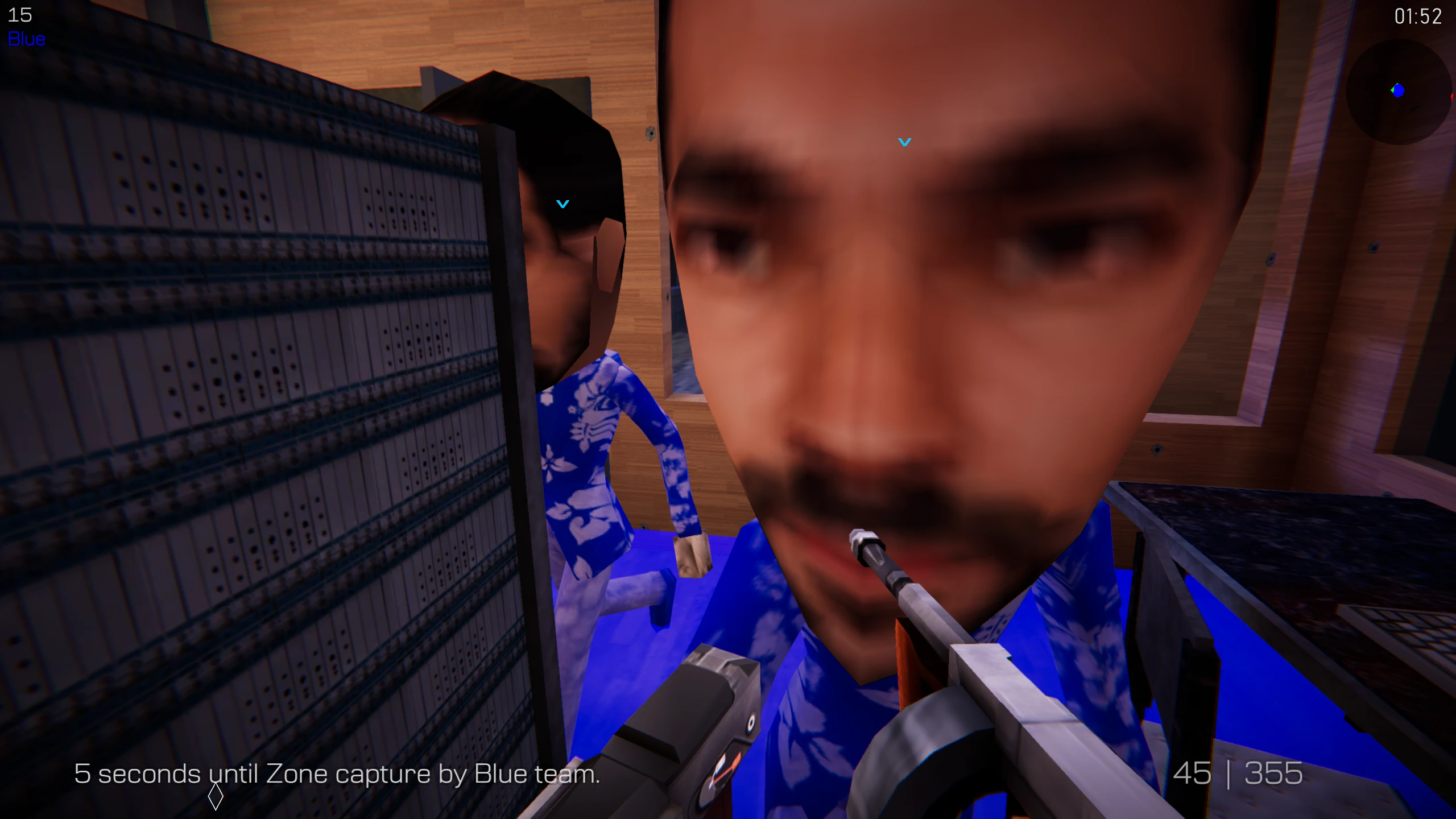
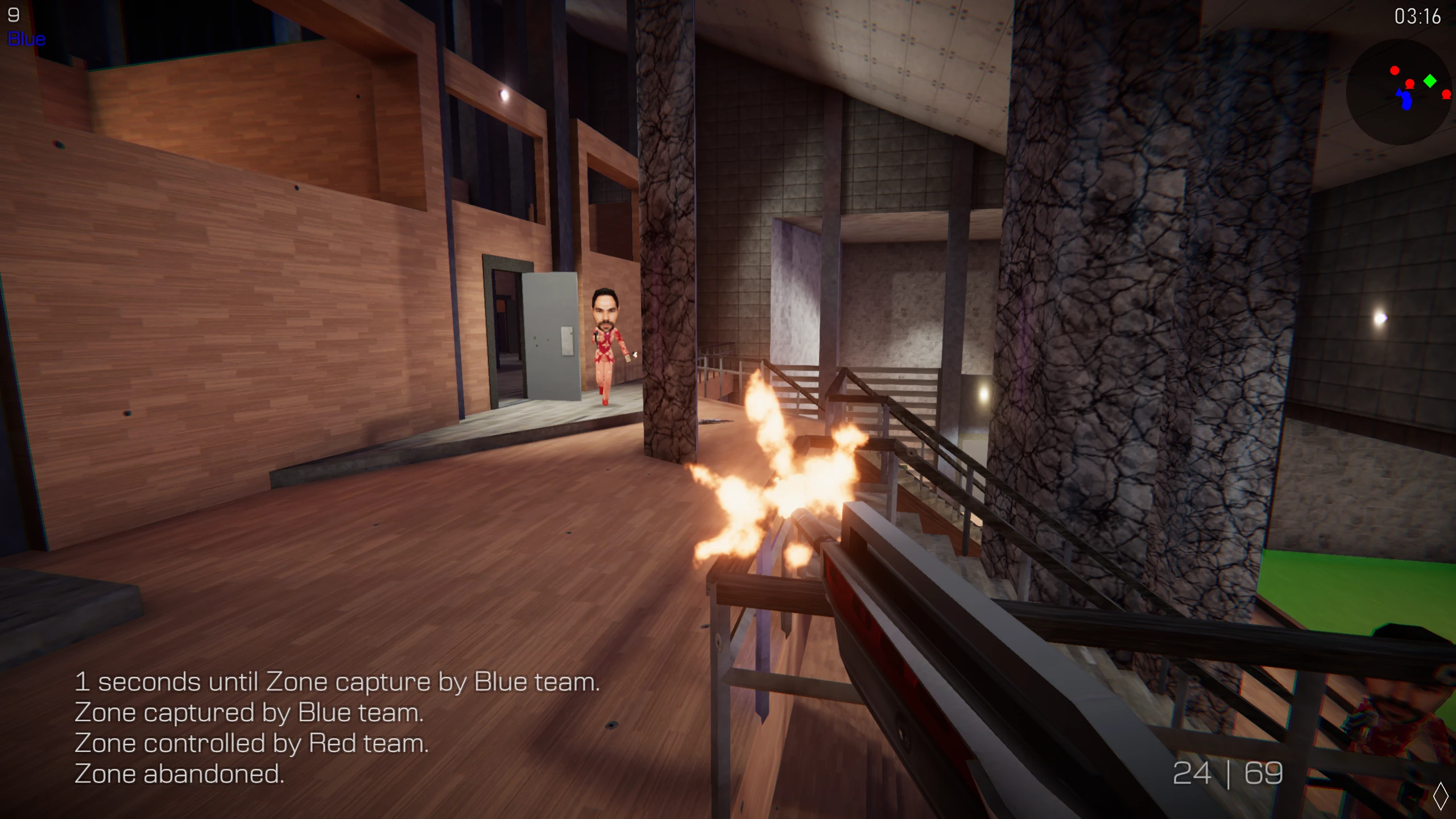
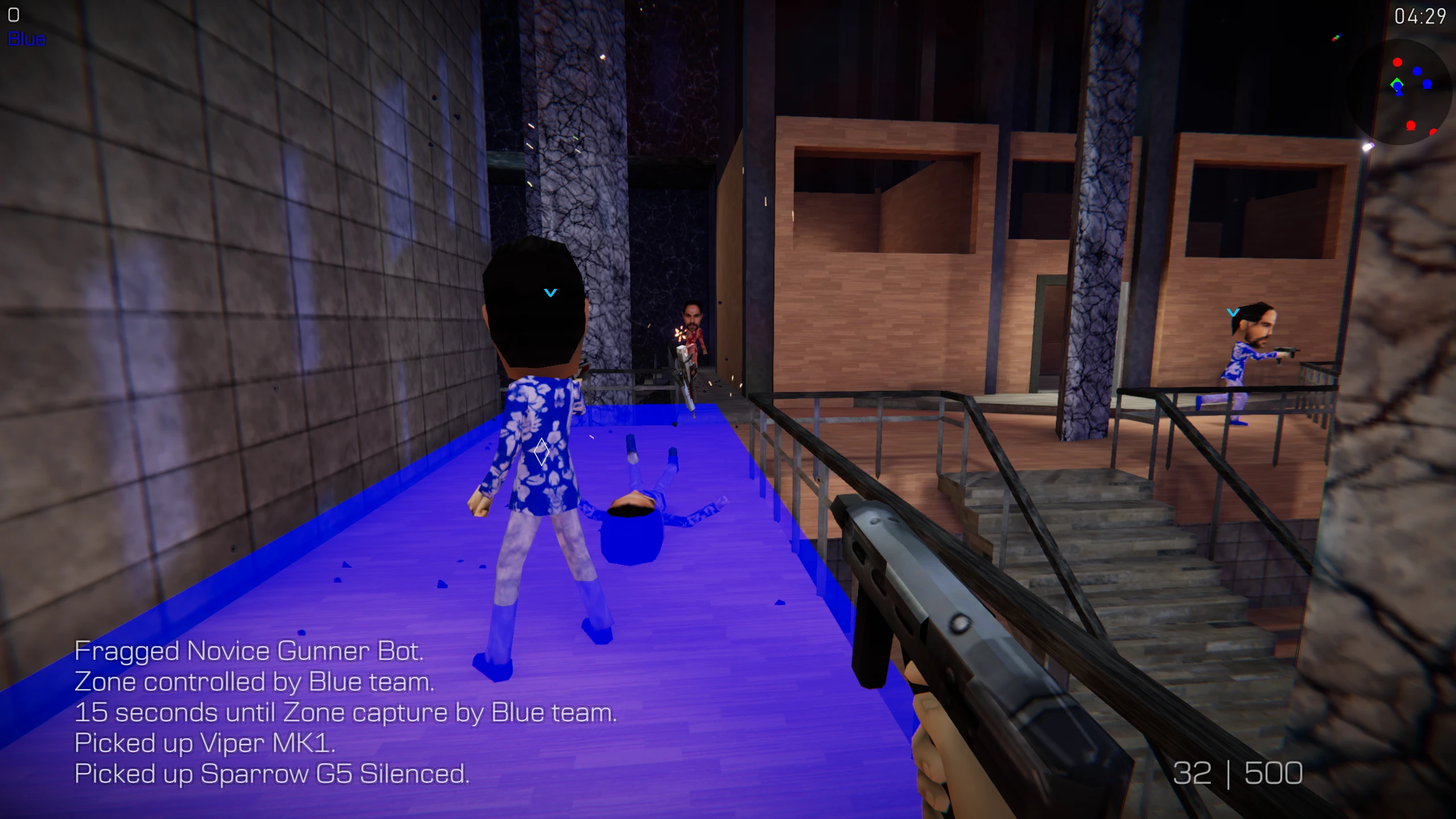
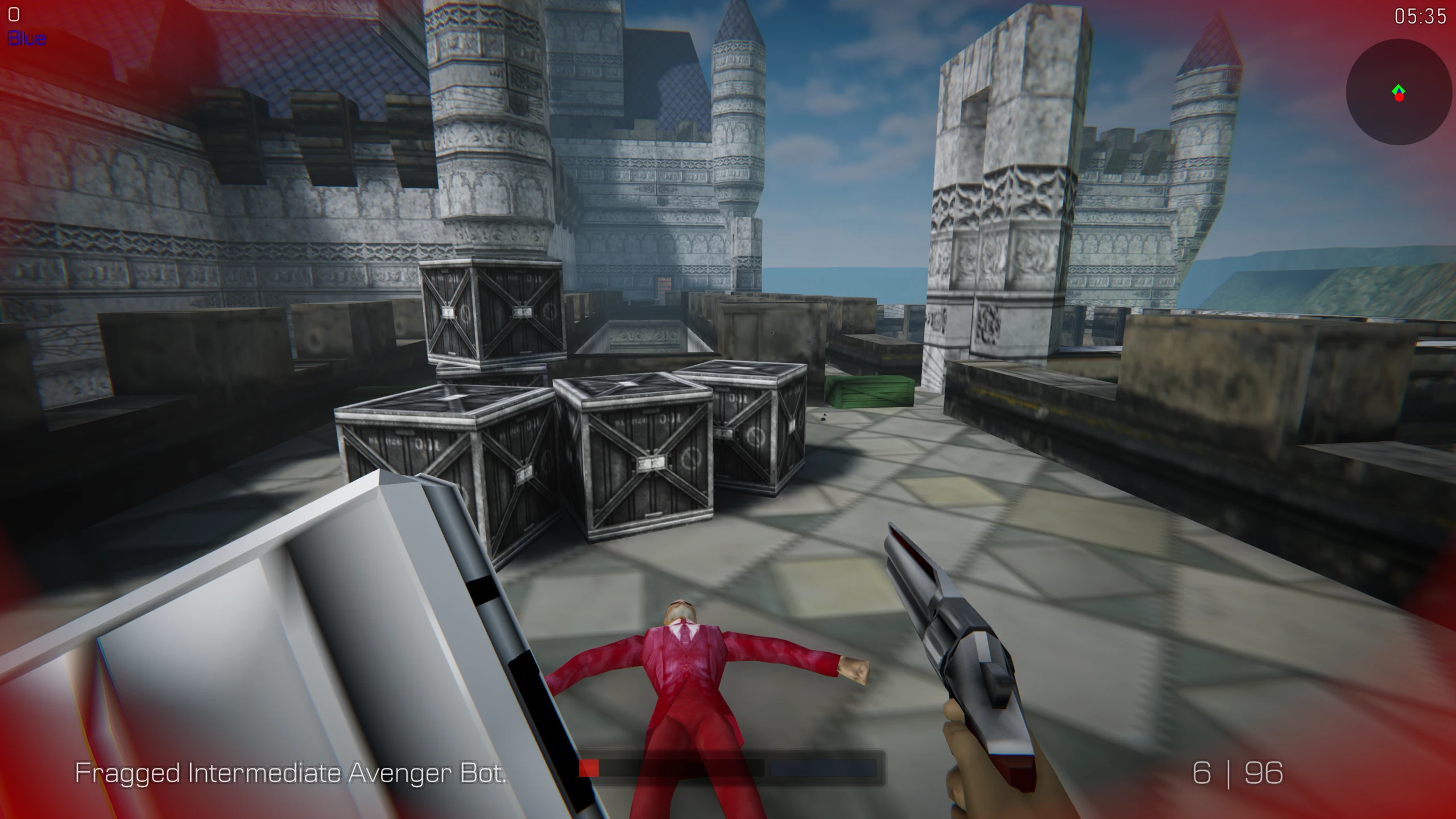
Of course Agent 64: Spies Never Die includes multiplayer components. The whole campaign mode can be taken on with up one co-op buddy in split screen mode, or up to four co-op buddies over the internet. You can set your preference for horizontal or vertical split screen, which is a lovely touch (though only a barbarian would choose vertical). There’s also the competitive multiplayer mode which can be played in split screen or by heading online. You can’t play split screen and go online simultaneously, though, which is a bit of a let down. Still, whether you’re playing online or off, there’s some solid customisation available to fine tune your next skirmish. You can add up to eight bots, individually adjust their behaviours, and assign teams to help level the playing field if you’re playing against a particularly capable friend. There are three gameplay modes available including Deathmatch (kill all the things), Zone (basically secure an area, King of the Hill style), and Briefcase (hold onto this for as long as possible to accumulate points). You can also stipulate exactly what weapons you start with and what can spawn on the map. And yes, you can recreate GoldenEye 64’s infamous ‘slapper’s only’ mode where weapons are outlawed and silly hand chops are the only tools in your arsenal. It’s glorious.
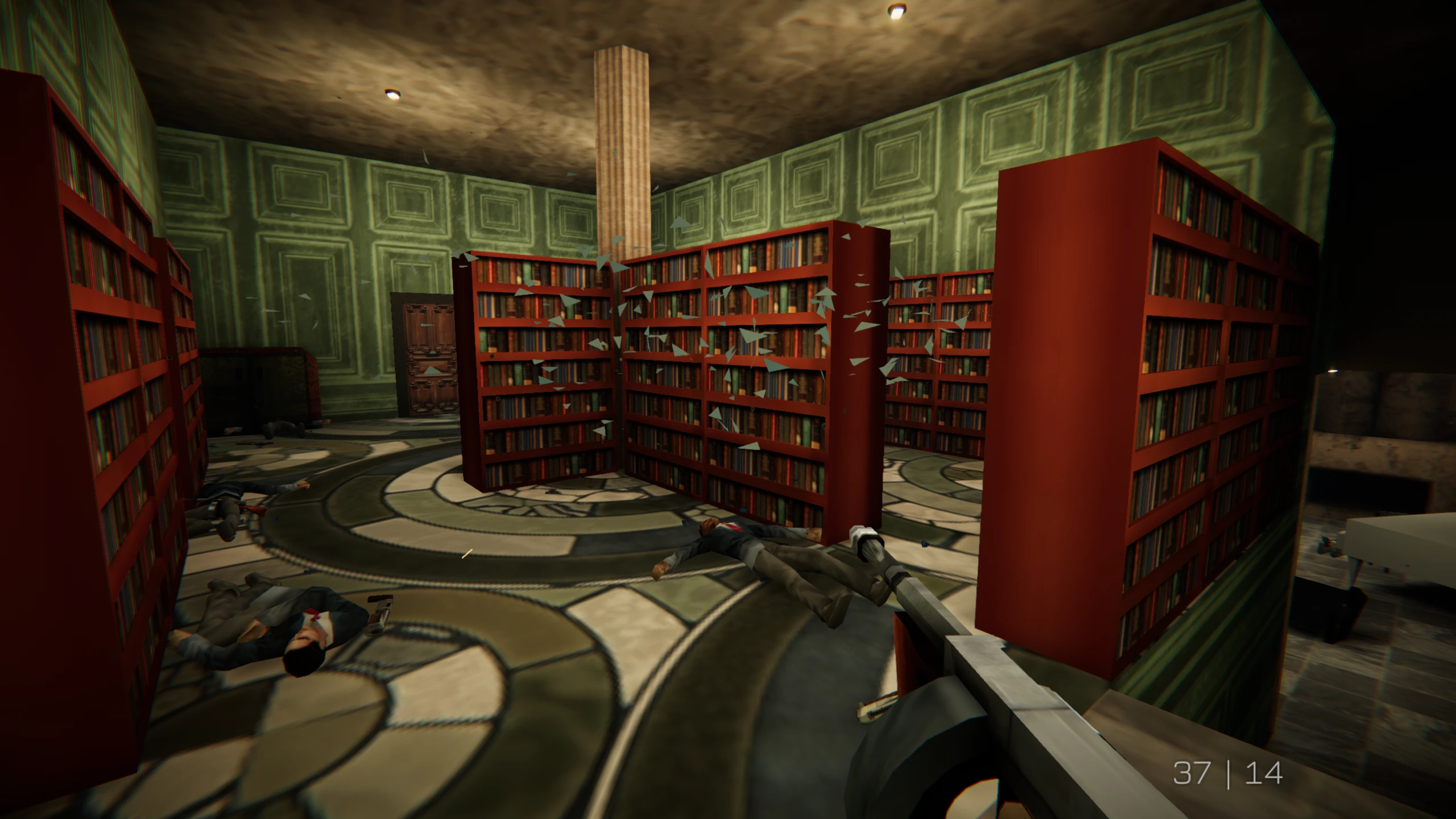
As far as multiplayer maps go, it’s quite slim pickings until you unlock more, with only five maps available to begin with. Some of them are very tough to unlock, requiring that you complete some merciless tasks. The handful of maps that I was able to test were all condensed versions of existing campaign missions, except for the maps, ‘Castle’ and ‘Library’, which are both sections from the ‘Castle’ mission, so… I hope you like castles. The maps did offer up plenty of space for smaller groups to enjoy a more chill, strategic match. When you’re playing with a full lobby and with bots running around, things can get hilariously chaotic.
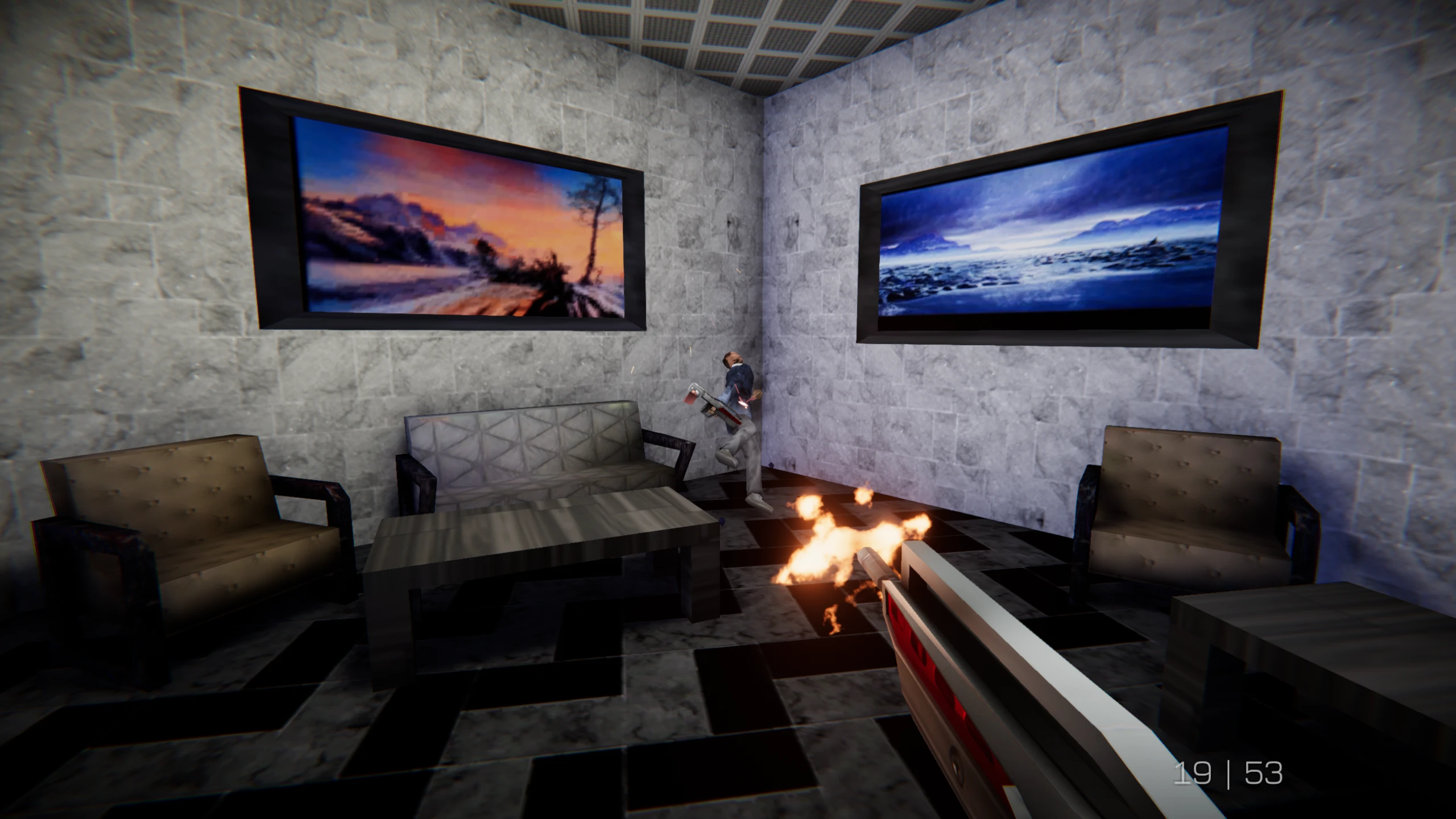
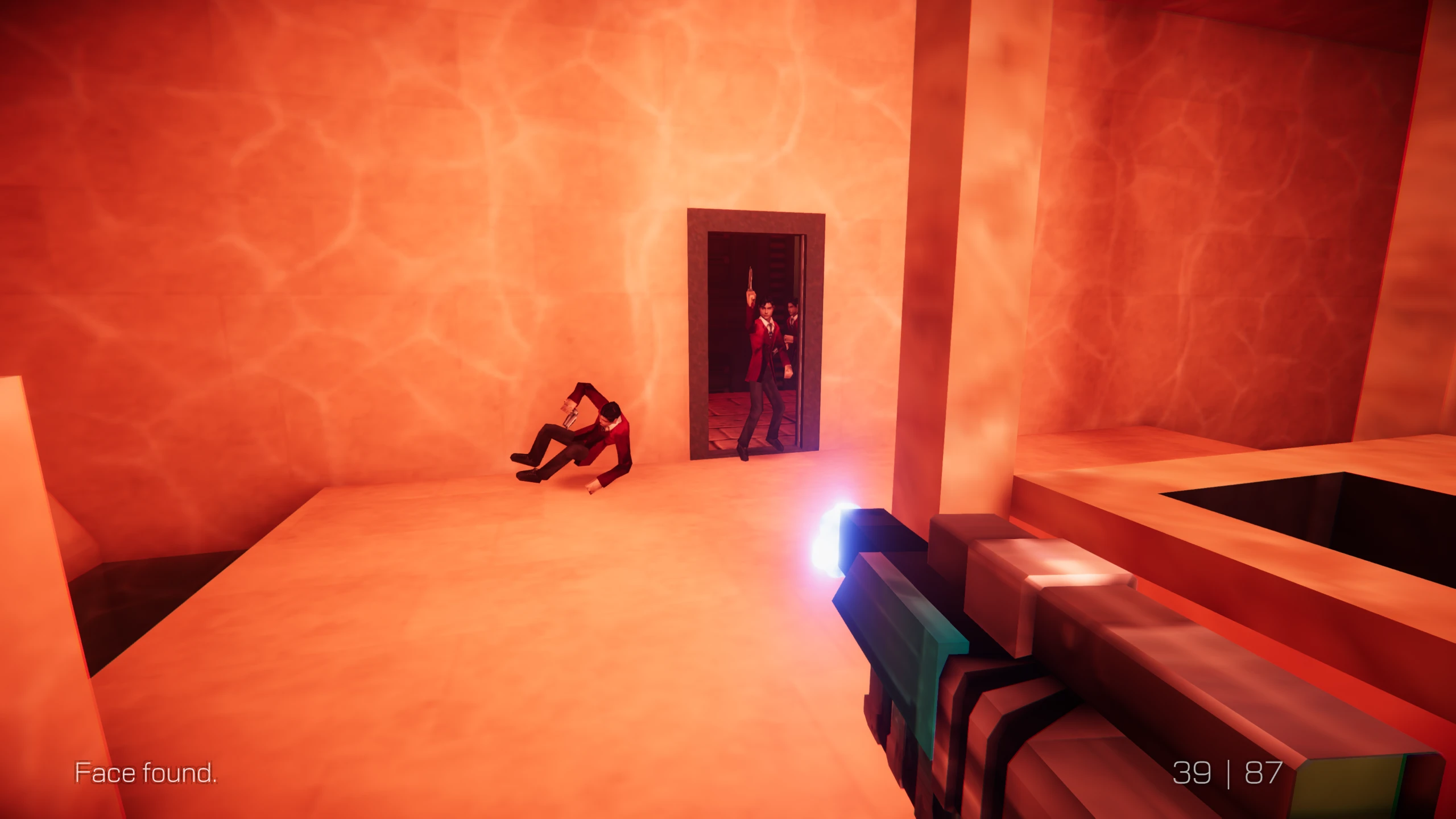
As far as weapons and gunplay go – most of the weapons look, feel, and sound right on the money. Even the starter ‘Sparrow’ pistol feels punchy with satisfying pops that stagger enemies. The SMG quickly became a firm favourite of mine, not only because it spews a million bullets a minute, but it just plain feels good to wield. The shotgun, hand cannon, assault rifle and light machine gun all have a place, and put in the work in the right circumstances. The remote and proximity mines don’t turn up much at all in the campaign (the proximity mines are a total no-show anyway), but they are a saboteur’s dream in multiplayer – being effortlessly and hilariously fun to use. The sniper rifle was a bit of a let down with its paltry zoom and lack of oomph, and the plasma rifle also lacked some panache, despite packing dealing quite high damage. The rocket launcher checks a box – I didn’t love it, I didn’t hate it. It did it job of making rockets go boom just fine. Agent 64: Spies Never Die covers all the core weapon types you would expect, but disappointingly doesn’t reach for the same lofty heights of variety seen in Perfect Dark. Sure, Perfect Dark and GoldenEye 64 both set a high bar, but there’s nothing amongst Agent 64‘s weapon stable that could be consider wild or imaginative. Nothing that even comes close to dethroning the laptop gun, Far Sight sniper rifle, or even the down-in-a-oner Golden Gun.
One thing I did especially like about the combat, is that blood, gibbing, and anything gratuitous is totally absent. I didn’t even need to disable anything. Shoot an enemy and they’ll usually react with an ‘Ooh!’ and stagger or crumple, but there’s no unpleasant blood spray or wailing. It’s about as tame as it gets for a modern day shooter.
Performance-wise, I enjoyed a flawless experience playing through the whole game on Fedora Linux with GE-Proton v11.3 and my 9800x3D and 9070 XT combo. Frame rates consistently hovered around 180 FPS at 1440p resolution with all graphics settings maxed out. No visual bugs, no hangs, no crashes – I couldn’t fault it.
Conclusion
Agent 64: Spies Never Die is a respectable modernisation of the N64 era spy FPS. Nostalgia bait or not – there’s a lot to like about the GoldenEye 64 and Perfect Dark formula in 2026. The characters and story are suitably campy, the gunplay feels solid, and the multiplayer has plenty going for it. Expect to spend many hours trying unlocking all the bonus content, clearing the harder League modes, and honing your speed run skills to beat the par completion times for campaign missions.


 3.5/5.0Good