System Config
- Graphics Card: AMD Radeon RX 9070 XT
- CPU: AMD Ryzen 7 9800X3D
- Launcher: Steam
- Graphics Driver: mesa 2:26.0.1-3
- Driver: 6.19.6-2-cachyos
I’d never seen anything quite the original Crash Bandicoot when it released in 1996 on the OG PlayStation. 3D platforming was still a relatively new genre, and it was still alien and wild and mind blowing. The colourful visuals, the unforgiving platforming, the jaunty music – it all melded together to make for a crazy-fun ride.
Crash was on a well deserved trajectory to becoming the platforming poster boy for Sony. Sure, he never quite rose to the same extraordinary heights as Mario or Sonic, but the manic marsupial for a time really turned heads. The original trilogy still has its die-hard fans, but the wait for a true sequel that measures up to the original three has been a long one.
New developer Toys For Bob clearly understands the frustration that fans have felt in waiting so long for a direct sequel to Crash 3. They’ve returned to the series’ roots and brought back everything that needed to be brought back, with some much needed modern polish.
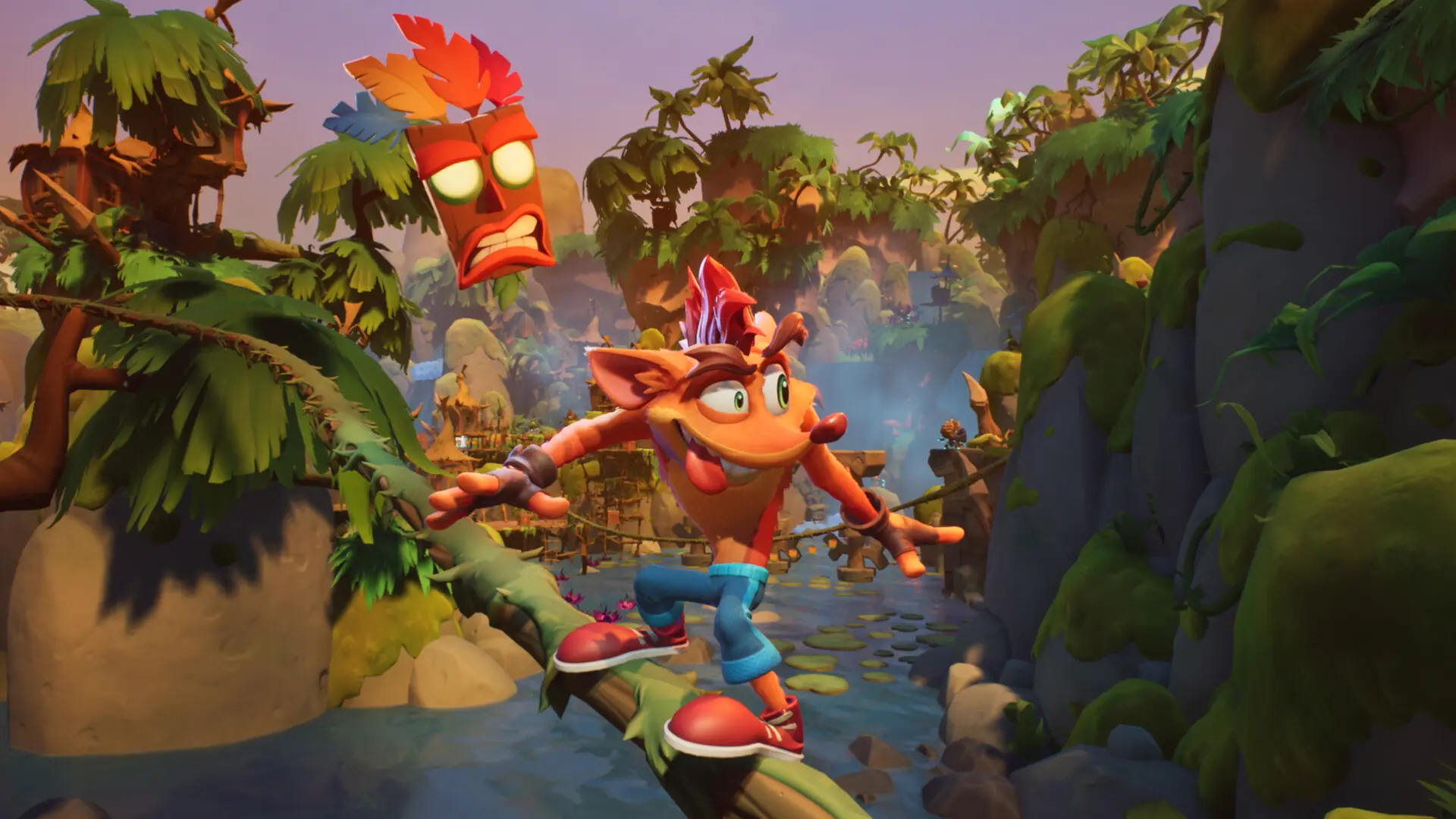
The familiar Crash of the ’90s makes a return, and so does his sister Coco, and plenty of other mainstays and even cameo characters. Of course, Doctor Neo Cortex makes a return, fully reinstated as the big bad for the fourth time – and I’m not mad about that. Cortex’s latest hair-brained attempt at world domination is the most bombastic one yet, and includes a few welcome and silly twists.
Crash is still effectively mute, only letting out occasional utterances when in agreement, bafflement or pained. So it’s up to his friends and the new Quantum Masks to help chivy along the plot. Fans of the older games will definitely recognise returning familiar faces. Strangely, one character with a historically minor and ditsy damsel in distress role makes a return as, well, something the exact opposite of that; she might as well have be a brand new character. Her presence is sort of hand waved as a result of time and space going haywire, and it was never not jarring whenever she would turn up.
Frustratingly, though the various characters all have great chemistry and the majority of dialogue is funny and endearing – there are a few instances of bad language that don’t belong within a million miles of an ostensibly kid friendly game. We’re talking B-bombs such as “Bast—” and “Boll—-” that come out of nowhere and pour ice cold water on the otherwise family-friendly mood. 😐
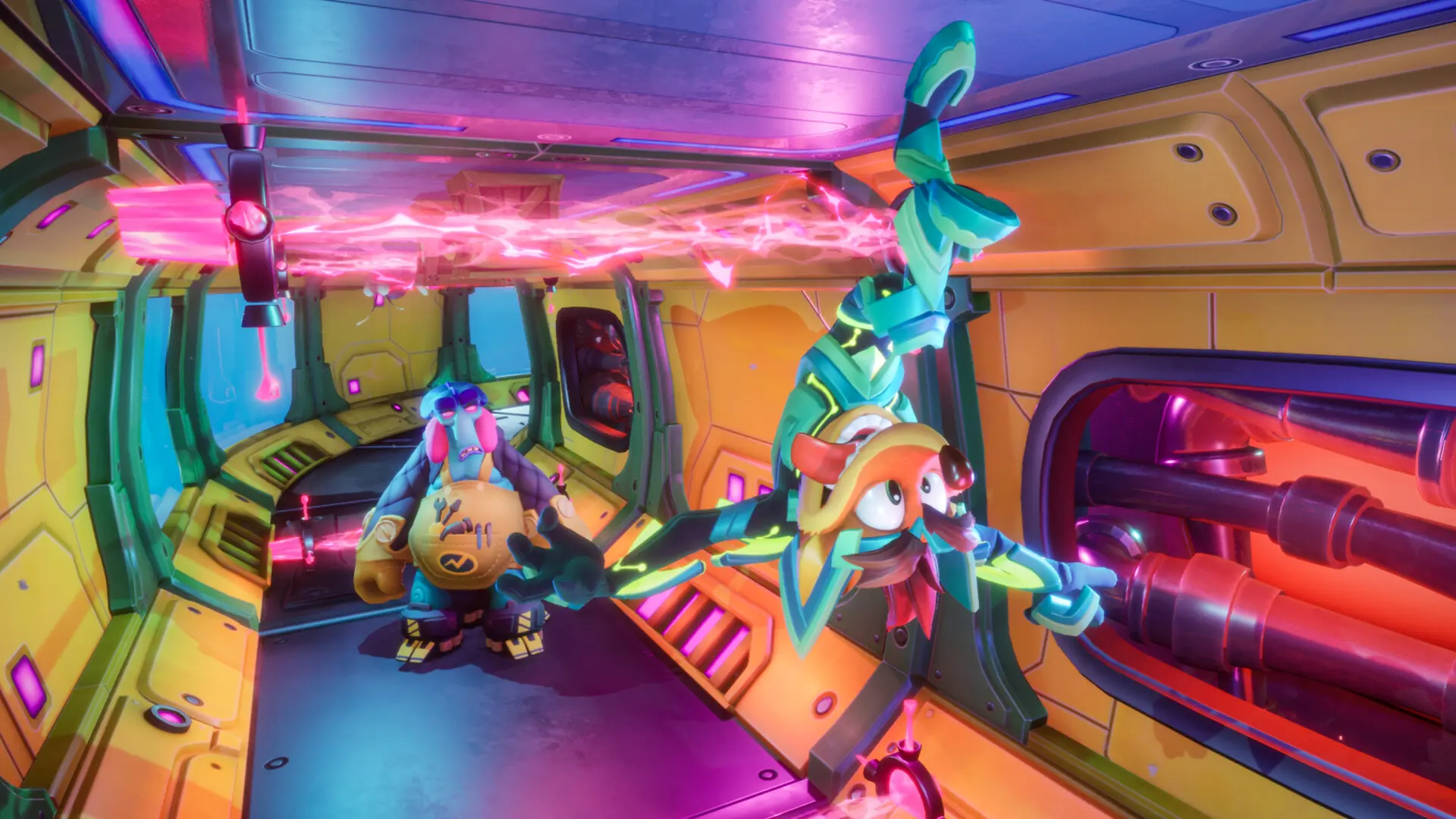
Other than Coco, who shares an identical play style to Crash, each of the other playable characters have unique gameplay mechanics. The majority of the levels have you playing as Crash or Coco, but there are some levels that have you playing as other team members. No matter who you’ are’re playing as, you’ll be running through corridor-style levels, collecting pickups and fending off minions, but the tools you’ll have at your disposal get switched up a little. Crash and Coco have the ever reliable frenzied spin-nado attack. One character has a grapple hook that behaves most of the time, and helps with collect far-off goodies and zipping across death drops. Another character has a vacuum gun that can suck up enemy ordinances and fire them right back at them. And another character has a ray gun which turns enemies into solid or bouncy platforms. Gameplay isn’t radically different across characters, but the unique moves and character quip can help to keep things engaging. It would have been great to see Coco with a unique trait to help set her apart from Crash, but ultimately the two of them are mechanically identical.
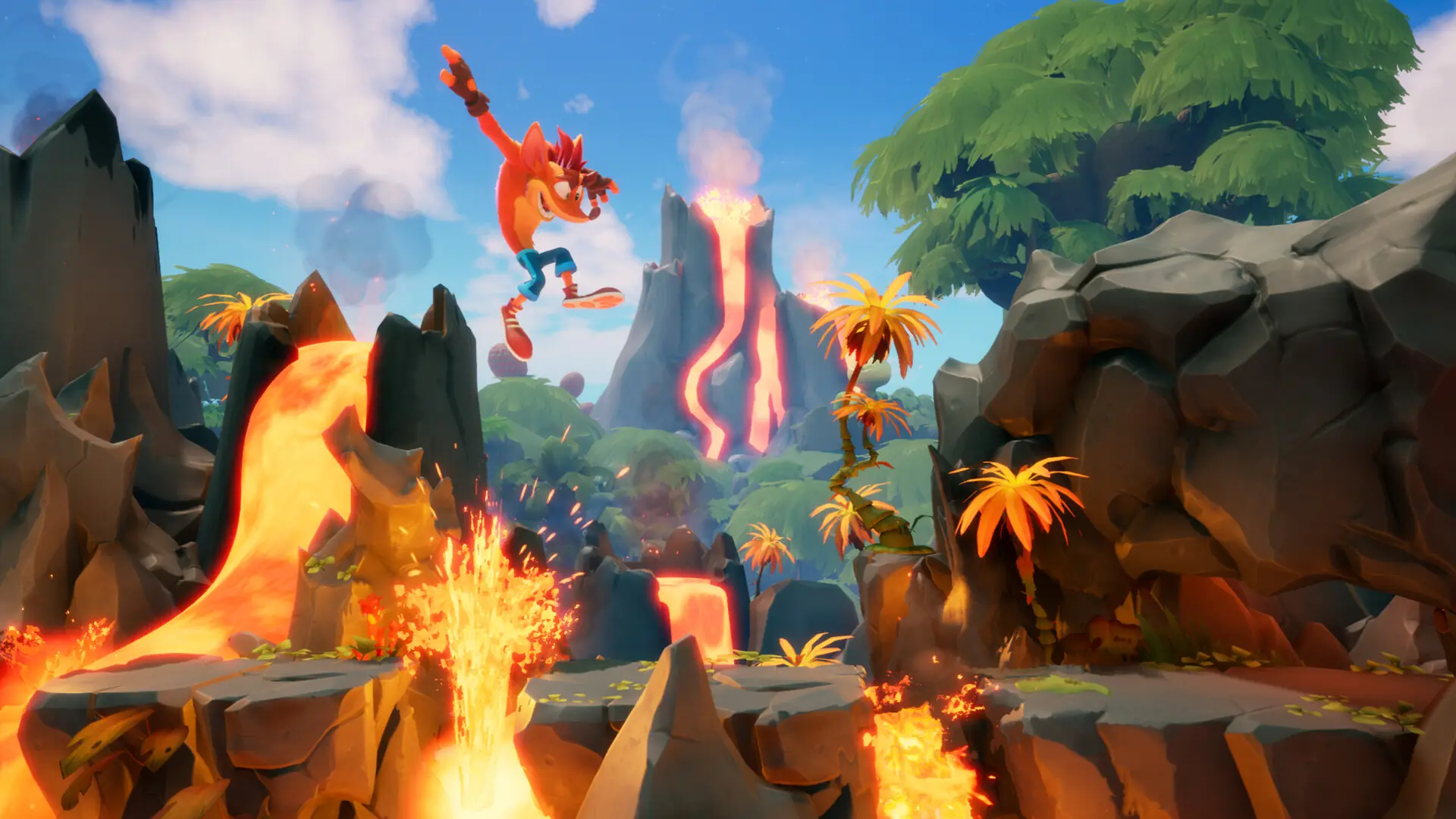
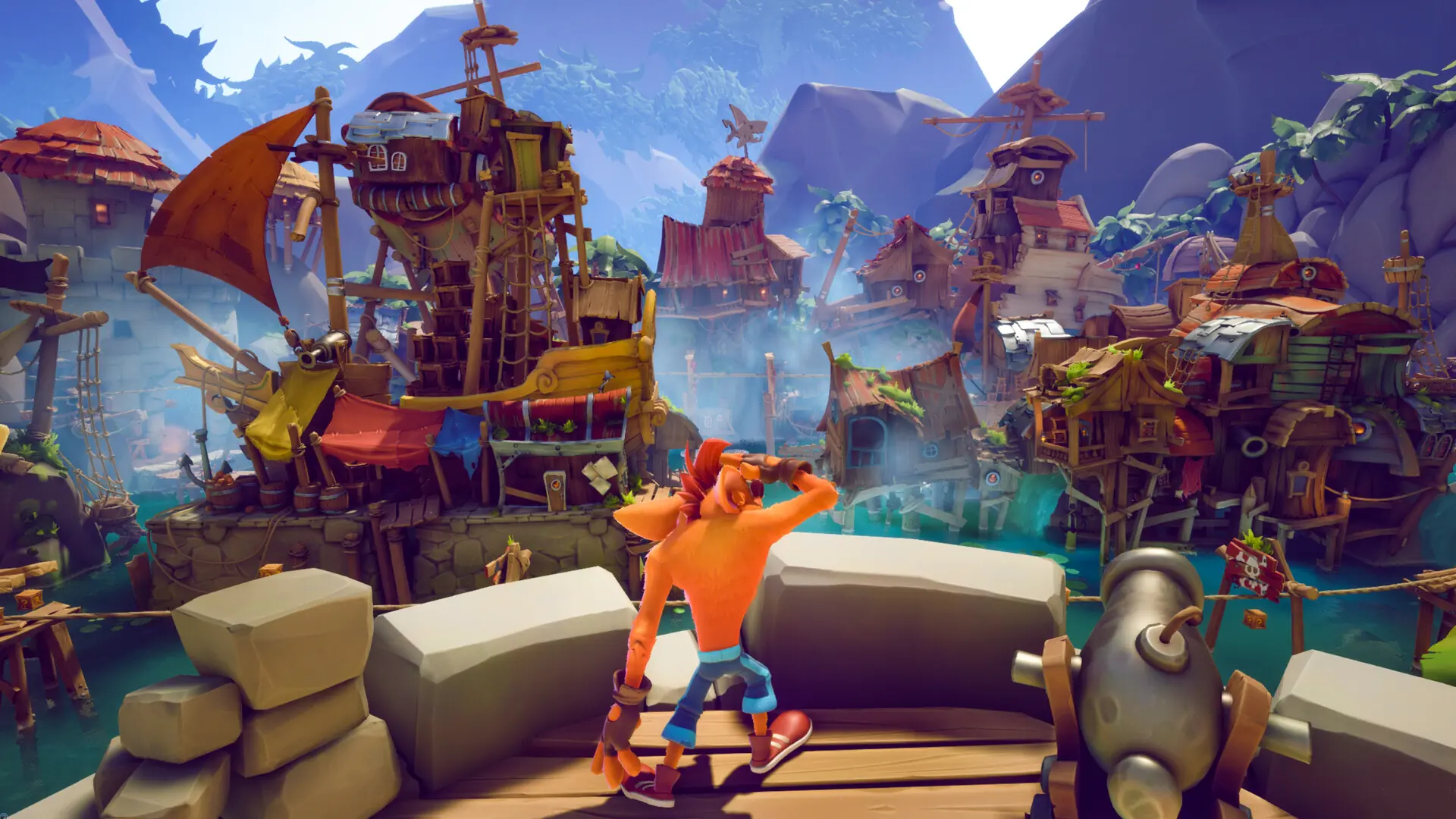
Never let it be said that Crash games feature boring level design. You’ll hop across time, taking on dinosaurs in a prehistoric jungle, nautical monsters on a pirate ship, bandits in a Mad Max-style desert wasteland, amongst other wild locales. The music is always jaunty and theme fitting. Though, it’s a real shame that some of the mission names flirt with gross innuendo, with titles like “Booty Calls”, “Ship Happens”, “Rock Blocked”… as the game is otherwise creatively brilliant. The levels pop with cartoonish vibrancy. The enemies guard and patrol with neat quirks and personalities. And none of the zones (or Dimensions as they are known in-game) outstay their welcome. You’ll conquer a handful of levels per zone, then you head through a new dimensional rift to the next zone.
Alternatively, you can mop up additional rewards by revisiting levels in N.Verted mode (which applies a zone-themed filter and effectively mirrors the level) or tackle cherry-picked levels from the perspective of another character. Some zones feature a boss, some don’t. Once in a level, you can make a beeline for the finish, or you can spend time scouring nooks and crannies for gems to unlock bonus skins for Crash and Coco. There are also Flashback Tapes available to unlock challenging Flashback Tape levels that sport a retro VHS filter and are exceedingly difficult. As if that wasn’t enough replay value, there are bonus mini-levels inside the main levels which gradually go up in difficulty and require some nifty platform problem solving.
The earlier zones ease you in gently with mild platforming and forgiving checkpoints. And as you progress, the game starts to ramp up in difficulty, before it really stops pulling its punches in the final few levels. It’s brutal. The penultimate level just before the final boss encounter is unapologetically cruel in its demand for platforming perfection. The game isn’t totally without mercy, though, and will respawn you with an Aku Aku mask (basically a one-use shield) if you’re on a death streak. And sometimes you’ll be treated to a checkpoint that’s even more within your reach. The game will knock you down, but it will at least wait until you’re back on your feet before it continues its pummelling.
Casual players could expect around 8-9 hours of gameplay from the story mode alone. But the replay value in this game is off the charts for completionists who welcome a very, very, very, very tricky challenge. Switch from “Modern” difficulty to “Retro” difficulty, and you’ll see just how punishing the game can really be. Then set your sights on clearing the many optional side levels and errands, and if your spirit hasn’t been totally crushed, the Flashback Tape levels will finish the job.
My 9800X3D and 9070 XT combo maintained 100-120-ish FPS in 4K with max settings for most of the story mode. The only times where my frames stumbled to sub-60 FPS were during the first (very hectic) boss battle, and a futuristic cityscape zone with conga lines of hover cars chewing up the performance. Knocking the graphics down from “N.Sane” to “High” sorted that right out and my computer never broke a sweat after that.
The only bug I encountered during my near 9 hours of playtime occurred when I loaded into a bonus level, and none of the graphical assets rendered. Not a one. It was just endless white stretching on, but the music carried on like a champ. Reloading to the last checkpoint cleared that up, and I re-entered the bonus level with zero issues after that. This could have been a quirk of playing on Linux using Proton 10 Experimental, but overall performance and reliability was top notch.
Conclusion
Crash Bandicoot 4: It’s About Time is a largely solid return to form and worthy sequel to the original trilogy. It’s a cartoonish platformer that takes no prisoners, much like the games that came before it. Coco would have benefitted from unique gameplay, and the infrequent bad language and innuendo is an unwelcome stain on an otherwise welcome entry to the series. In virtually all other areas: Crash 4 delivers with great visuals, enjoyable gameplay, varied zones, and plenty of content to chew on.

 4.5/5.0Great